
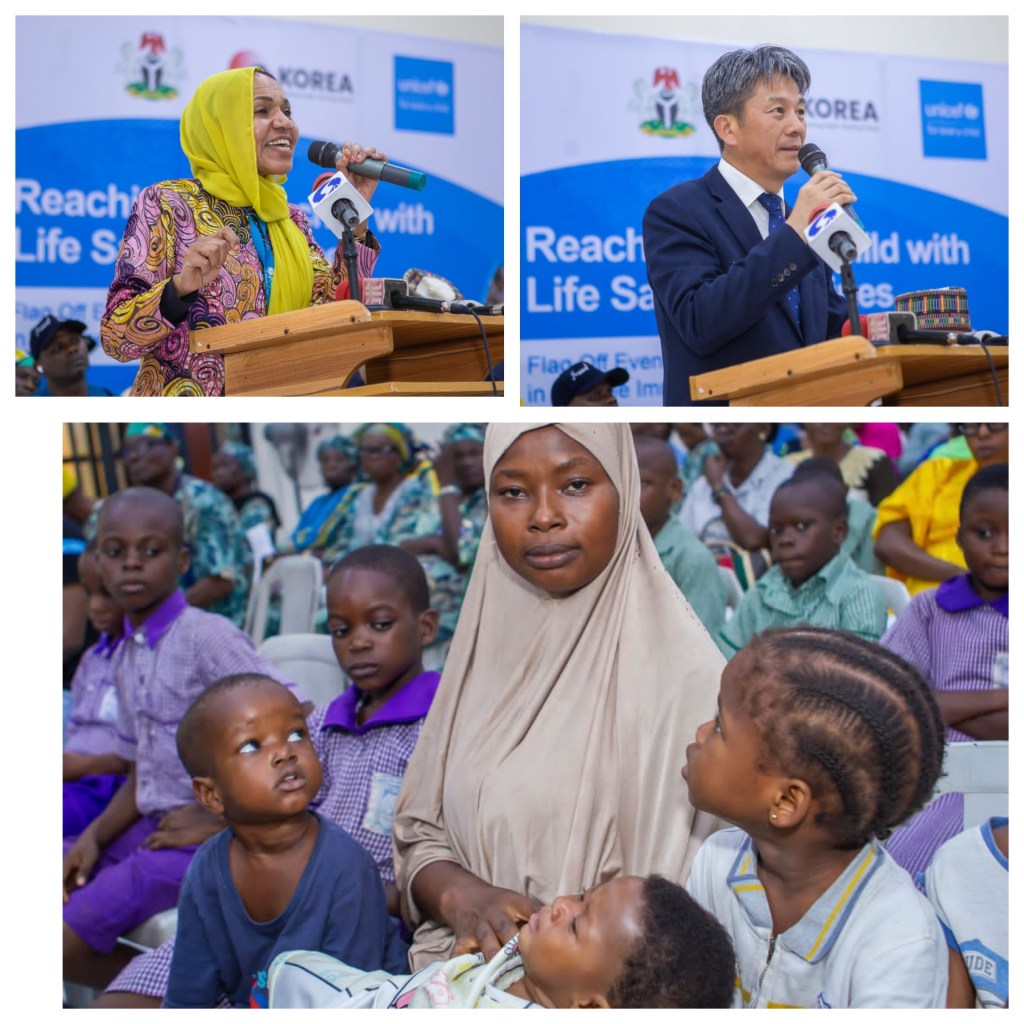
Nigeria accounts for an estimated 2.2 million zero-dose children—the highest in Africa and among the highest globally—underscoring the scale of gaps in access to routine immunization and basic healthcare services.
The Country Representative of the United Nations Children’s Fund (UNICEF) Wafaa Saeed, disclosed this at the flag-off ceremony of the routine immunisation programme under the Access to COVID-19 Tools Accelerator (ACT-A) Investments Project, implemented through the partnership between UNICEF and the Republic of Korea in Badagry Local Government Area of Lagos State on Wednesday.
In her speech which was made available to journalists by the UNICEF Communication Officer in Lagos office, Blessing Ejiofor, Saeed said the figure represents a major public health concern, stressing that the affected children are “not just statistics.”
“These are real children, often living in fragile urban settlements, border communities, conflict-affected settings, and hard-to-reach areas; without access to essential services,” she said.
Saeed clarified that the situation is not due to a failure of vaccines, insisting that “vaccines work,” but rather reflects longstanding challenges linked to equity, access, and service delivery.
She emphasised that tackling the problem requires deliberate political commitment and collaboration among stakeholders.
The UNICEF representative commended the Federal Government of Nigeria, the National Primary Health Care Development Agency, and State Primary Health Care Boards for prioritising zero-dose children through targeted interventions.
She also praised the Government of the Republic of Korea for its support, saying, “Through this partnership, Korea has demonstrated a clear understanding that global health security begins by reaching those who are most excluded.
“This investment is about strengthening existing national and sub-national systems… and ensure that vaccines consistently reach every child, especially those who have historically been left behind,” she said.
Highlighting the broader implications, she said reaching zero-dose children goes beyond healthcare, but also a national development priority.
“Healthy children underpin human capital, productivity and social cohesion”, she said.
On sustainability, she warned that long-term impact must remain the focus.
“The true measure of success of these efforts will be sustainability: systems that continue to identify, reach and protect every child well beyond this generous investment,” she added.
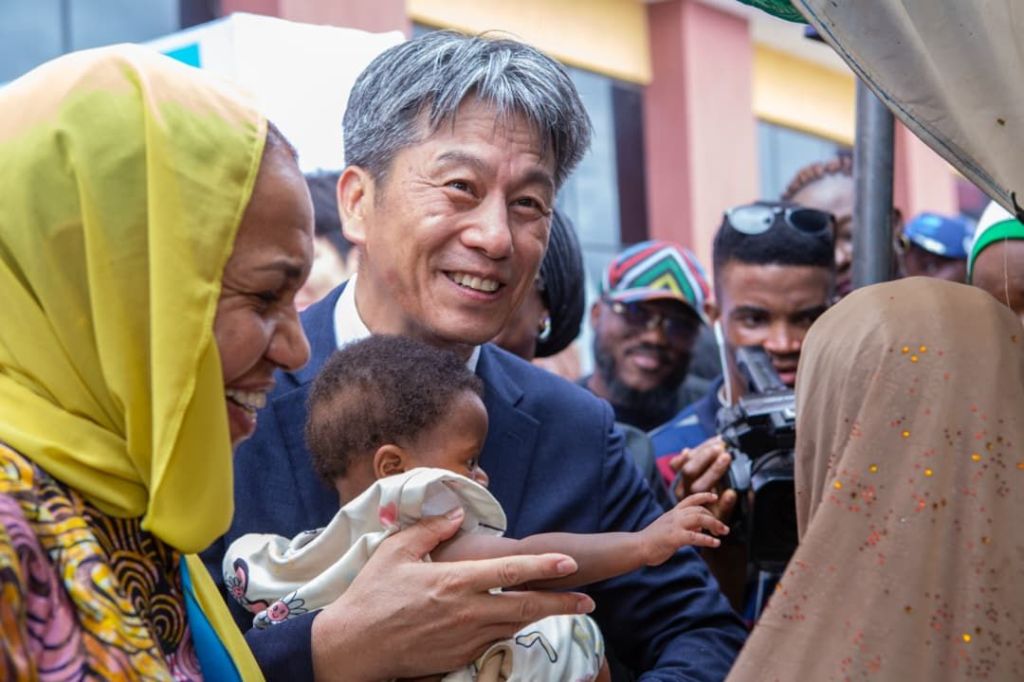
Saeed reaffirmed UNICEF’s commitment to ensuring that every Nigerian child is captured within the national health system.
“Today we raise the flag not only to mark the start of implementation, but to reaffirm a collective promise that every child in Nigeria belongs in the national health system, and no child will be left behind,” she said.
In his speech, the Consul General of the Embassy of the Republic of Korea in Lagos, Lee Sang Ho, announced a $5.6 million investment to support routine immunisation in Nigeria, targeting children who have received little or no vaccines.
He explained that the intervention, scheduled to run from December 2025 to December 2026, forms part of a broader $20 million allocation for 12 countries under the third phase of the ACT-A partnership, which began in 2023.
Out of this funding, he disclosed that Nigeria received $5.6 million due to its high burden of zero-dose children—those who have not received any
According to him, the programme will cover 40 local government areas across Lagos, Ogun, Niger, Bauchi, Adamawa states and the Federal Capital Territory, focusing on expanding access to life-saving vaccines.
He noted that the project will include targeted vaccination campaigns, scaling up immunisation sessions in outbreak-prone communities, strengthening health systems, and addressing social and behavioural barriers to vaccine uptake.
“The choice of Nigeria is strategic because Nigeria records a high volume of children with little or zero-dose immunisation, which poses great danger to global health security,” he added.
He reaffirmed his country’s commitment to supporting Nigeria’s health sector, noting that the initiative reflects a shared resolve with UNICEF to make a positive impact both locally and globally.
“It is necessary that all multilateral stakeholders continue to collaborate to ensure that this routine immunisation project achieves and surpasses its target goals,” he said.
 ..all about information services
Leave a Reply