
Former Ondo State First Lady and founder of the BEMORE Empowered Girls Foundation, Dr. Betty Anyanwu-Akeredolu, has called for deliberate efforts to ensure women and youths are not left behind in the rapidly evolving era of Artificial Intelligence (AI).
She made the call while delivering a keynote address at the 1st International Interdisciplinary Biennial Conference on “Artificial Intelligence and the Human Future: Ethics, Communication, and the Voices of Women and Youth at the Margins,” held at Dominican University Ibadan from May 6 to 7, 2026.
Speaking on the theme, “Inclusive Artificial Intelligence: Empowering Women and Youth in the Digital Future,” Anyanwu-Akeredolu stressed that the future of AI must be intentionally inclusive to prevent existing inequalities from widening.
The former First Lady shared a personal story of transformation through the BEMORE Empowered Girls Foundation, recounting how a young girl trained in solar technology evolved into a confident innovator.
According to her, the experience demonstrated that when girls are exposed to knowledge and opportunities, they do not merely participate in the future but actively shape it.
She reflected on her upbringing and how it inspired her commitment to creating opportunities for young girls through the establishment of BEMORE, noting that the initiative has helped many girls develop confidence, creativity, and leadership abilities through digital and technical training.
Anyanwu-Akeredolu highlighted the global impact of Artificial Intelligence, describing it as both transformative and capable of deepening inequality if inclusion is neglected.
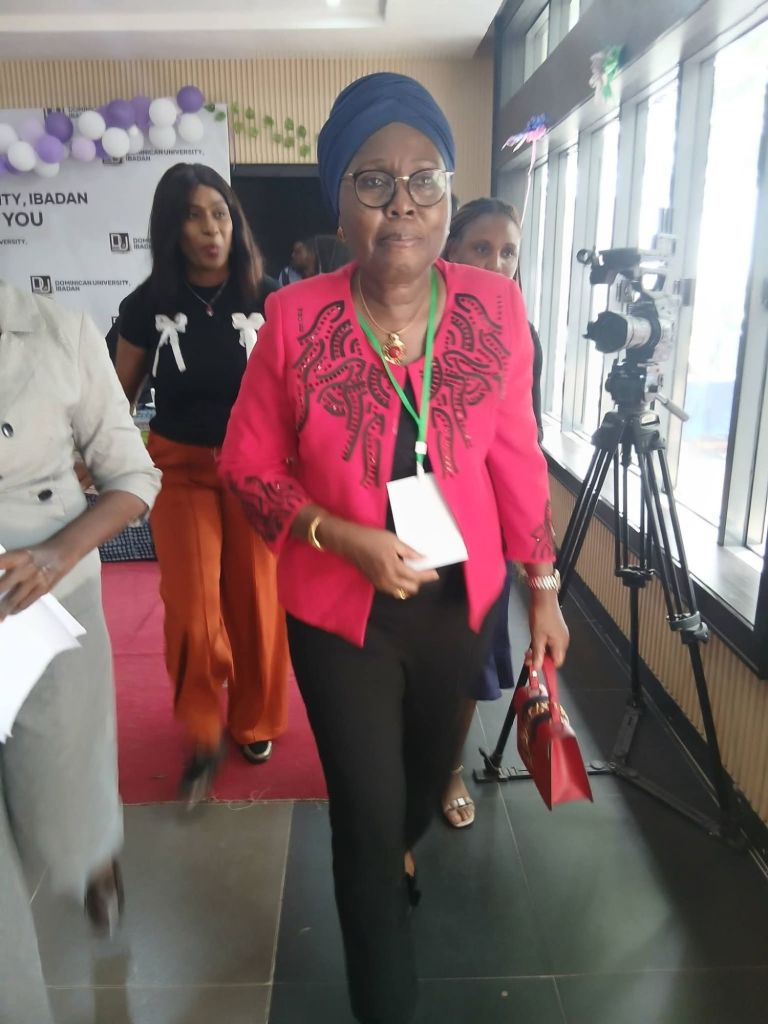
She observed that women remain significantly underrepresented in STEM and AI-related fields despite Africa’s rapidly growing youth population, emphasizing that investment in digital skills for young people, especially girls, has become an urgent necessity.
Drawing from the experiences of BEMORE beneficiaries, she cited examples of young women excelling in solar entrepreneurship, engineering, data analysis, and creative industries.
“These success stories prove that talent is universal, but access to opportunity is not,” she stated.
The BEMORE founder also advocated reforms in digital education, gender-inclusive STEM policies, improved technological infrastructure, establishment of community innovation hubs, and ethical AI governance frameworks.
Projecting into the future, she envisioned an Africa in 2040 where women and youths would lead AI innovation, renewable energy would power communities, and African talents would contribute significantly to global technological advancement.
She concluded by urging governments, institutions, and stakeholders to invest in women and youths, stressing that the choices made today would determine whether the AI-driven future becomes equitable, inclusive, and human-centered.
 ..all about information services
Leave a Reply