

..Cybercrime Laws Must Not Be Used to Silence Journalists, says Soyombo
..as West African Journalists, Experts Seek Stronger Safeguards for Press Freedom
By Mary Agidi
The Deputy Ambassador of the Netherlands to Nigeria, His Excellency Ronald Sonnemans, has described journalism as the oxygen of democracy, stressing that a free, credible and independent media remain essential to enabling citizens to make informed decisions and hold those in authority accountable.
According to him, democracy gradually loses its ability to function effectively when citizens are denied access to reliable information.
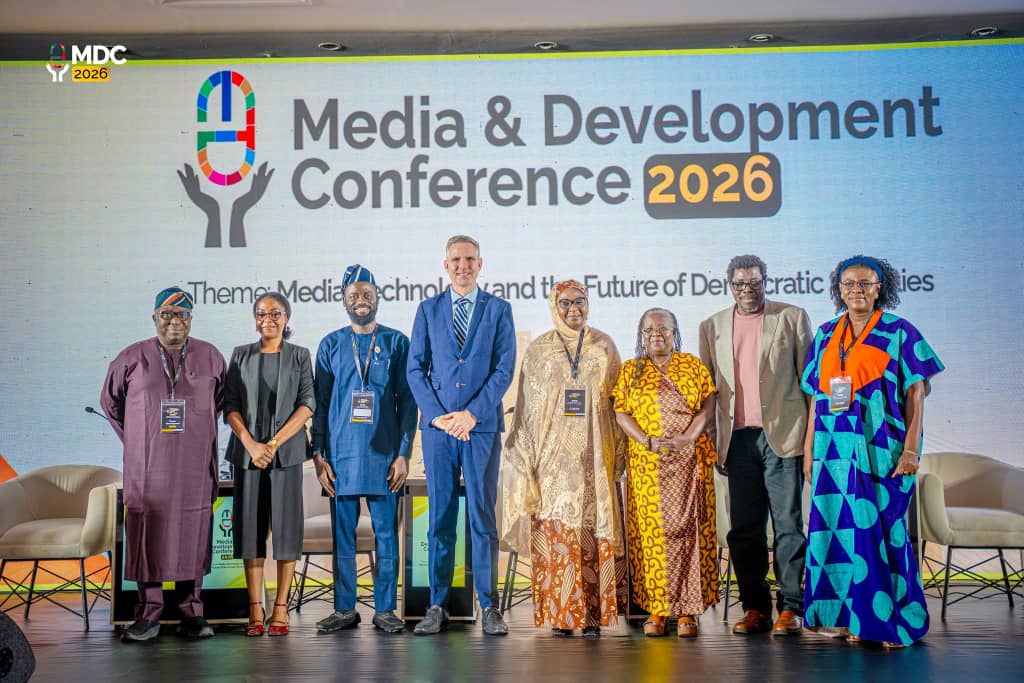
He spoke at the opening ceremony of the 2026 Media and Development Conference(MDC), organised by the Centre for Journalism Innovation and Development (CJID) at the Abuja Continental Hotel, Federal Capital Territory.
“A democracy without free and credible information slowly loses its ability to breathe. Citizens can’t hold leaders to account and trust their system without it,” he said.
The Deputy Ambassador affirmed that journalism was facing increasing pressure globally, with practitioners subjected to harassment, threats, imprisonment and, in some cases, killings for performing their professional duties.
He also expressed concern over the use of laws purportedly designed to protect society to silence dissenting voices, as well as the financial difficulties threatening the survival of independent media organisations.
He said the closure of independent newsrooms represented a loss to society beyond the journalism profession, as it deprived communities of platforms through which they could understand themselves and demand accountability.
While acknowledging that no country, including the Netherlands, had achieved perfection in protecting press freedom, he maintained that press freedom must be defended continuously.
“Press freedom is never something you win once and keep. It has to be defended again and again by every generation,” he said.
Speaking on the theme of the conference, “Media, Technology, and the Future of Democratic Societies”, he noted that the growing influence of artificial intelligence (AI) on journalism presented both opportunities and threats to democracy, making the need for its ethical deployment increasingly urgent.
The diplomat warned that the proliferation of AI-generated fake images, cloned voices and fabricated stories could undermine public trust in information and make it increasingly difficult for citizens to distinguish facts from falsehoods.
On the opportunities presented by AI, he noted that the technology could significantly improve journalistic efficiency, particularly in data analysis, fact-checking, translation and information accessibility.
He explained that AI could help smaller newsrooms analyse thousands of documents within hours, enable fact-checkers to work faster and translate reports into local languages, thereby giving journalists in smaller media organisations access to tools previously available mainly to larger media establishments.
“Used well and used with care, technology can strengthen journalism rather than replacing it,” he said.
He, however, stressed that the future of journalism in the age of AI must be guided by ethical considerations, transparency and accountability.
He challenged stakeholders to interrogate issues surrounding the ownership and control of AI tools, particularly whose interests they serve, noting that such questions should concern not only technology developers but also journalists, researchers, governments and civil society organisations.
The diplomat reaffirmed the Netherlands’ commitment to promoting freedom of expression and strengthening independent journalism, disclosing that the country, in collaboration with partners, including CJID, had supported journalists’ training, facilitated networks for dialogue and backed innovative tools and research.
He said the interventions were based on the conviction that a strong and independent media were in the interest of societies in Nigeria, West Africa, Europe and beyond.
He also called for greater collaboration among media organisations, governments, researchers, civil society groups and technology experts to address the rapidly evolving challenges confronting journalism.
Commending journalists for their resilience and creativity in sustaining independent reporting despite financial and operational difficulties, he expressed hope that ideas generated at the conference would translate into practical actions in newsrooms, classrooms, policy discussions and communities.


The conference drew speakers and participants from across West African countries, featuring discussions that highlighted the growing weaponisation of legal frameworks against independent reporting across the region and examined how legal intimidation stifles public-interest journalism.
The gathering also examined the legal reforms and regional solidarity mechanisms needed to protect the press, as well as the misuse of cybercrime laws to harass journalists.
Also in attendance were Archivists and historians who examined how deliberate, consistent and accessible archiving turns historical events and documents into a tool for modern democracy.
In this era of rising disinformation and scattered historical documents, they described archives as critical to preserving evidence and empowering citizens and journalists with the tools to hold leaders accountable across generations.
Among the panellists was renowned Nigerian investigative journalist and founder of the Foundation for Investigative Journalism, Fisayo Soyombo, who emphasised the need for journalists to rise against the use of cybercrime laws to gag the media.
He noted that the masses deserved access to information, as enshrined in the Constitution, and that providing such information was the responsibility of journalists. However, he warned that this responsibility would be difficult to discharge if journalists were silenced through the use of cybercrime laws.

Leave a Reply