

The United Nations Children’s Fund (UNICEF) has described birth registration as the foundational first right of every child, warning that children without birth records risk becoming “invisible” to government and excluded from essential social services.
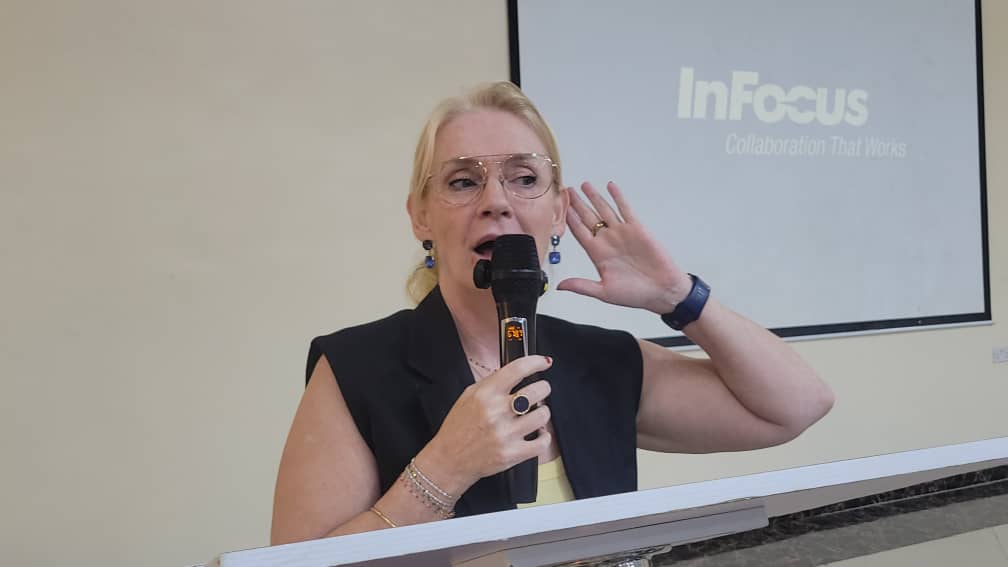
Chief of the UNICEF Lagos Office, Celine Lafoucriere, stated this during a media dialogue with journalists organised by the National Population Commission in collaboration with UNICEF, aimed at raising awareness about the importance of birth registration.
Lafoucriere stressed that every child born in Nigeria should have a birth record, noting that registration provides an official identity that remains important throughout a child’s life.
“Every single child in Nigeria should be registered. This is the foundational first right of a child. Every single Nigerian child needs to be registered in Nigeria,” she said.
According to her, failure to register a child at birth can affect access to basic services such as education, healthcare and social protection, while also creating difficulties later in life when such children need to participate in political activities or inherit property.
“In that civil register, no child that is not registered at birth will exist. They will be invisible,” she said.
The UNICEF official said the problem also poses a challenge to government planning and financing, particularly as Nigeria works to strengthen its social protection system.
She explained that children who are not captured in the civil register could be left out when government designs and funds social protection programmes.
Lafoucriere disclosed that about 3.5 million children under the age of one in Nigeria’s South-West region are currently not registered at birth as at last data, warning that the situation could leave them excluded from essential social services and government interventions.
“If 3.5 million children are still not registered, they will go unnoticed and there will be no government funding to support them simply because they are invisible,” Lafoucriere warned.
She identified poor understanding among parents, geographical barriers and gaps in digital birth registration services as some of the challenges affecting registration in parts of the country.
“Some of the challenges derive from the fact that families do not have a full understanding of the usefulness of their children being registered,” she said.
Lafoucriere added that some families, particularly those in isolated communities, find it difficult to access registration points, despite being willing to register their children.
She said UNICEF was supporting the government to strengthen and digitalise the birth registration system and bring services closer to families, particularly vulnerable populations.
“The digitalisation led by the government is also not fully functional, and this is what UNICEF is supporting the government with in terms of making sure that we have that digital birth registration service close to the families, as close to the families as possible,” she said.
She also called for stronger collaboration among government institutions, development partners, journalists and communities to ensure that every child is captured in the civil registration system.
“The Southwest is doing slightly better than other regions, but we cannot leave a single child unaddressed,” she said.
Lafoucriere urged journalists to use their platforms to educate families on the importance of birth registration, describing their role as critical to reaching communities with the message.
The Lagos State Director of the National Population Commission, Abiola Kekere-Ekun, implored journalists to intensify efforts to strengthen digital birth registration through adequate awareness creation.
He expressed optimism that the 2030 Sustainable Development Goal (SDG) target of achieving universal birth registration could be attained through coordinated efforts.
In his presentation, Dennis Onoise, UNICEF Child Protection Specialist, highlighted challenges to accelerating civil registration and legal identity services in Nigeria.
These include an inadequate number of registration centres and the associated long distances to access them, language barriers, inefficient registration processes, and insufficient financial, human and material resources, among others.
According to him, establishing, developing and maintaining civil registration and identity systems and their functions in Nigeria are primarily the responsibility of the government.
He highlighted key accelerators for scaling up civil registration and legal identity service delivery to include legal reform, data system interoperability and data sharing, digitalisation, integration of birth registration with primary healthcare services, decentralisation and social mobilisation.
Onoise disclosed that UNICEF had been at the forefront of supporting birth registration through various initiatives, including media support and the deployment of hundreds of tablet devices to states to facilitate digital registration.

Leave a Reply