

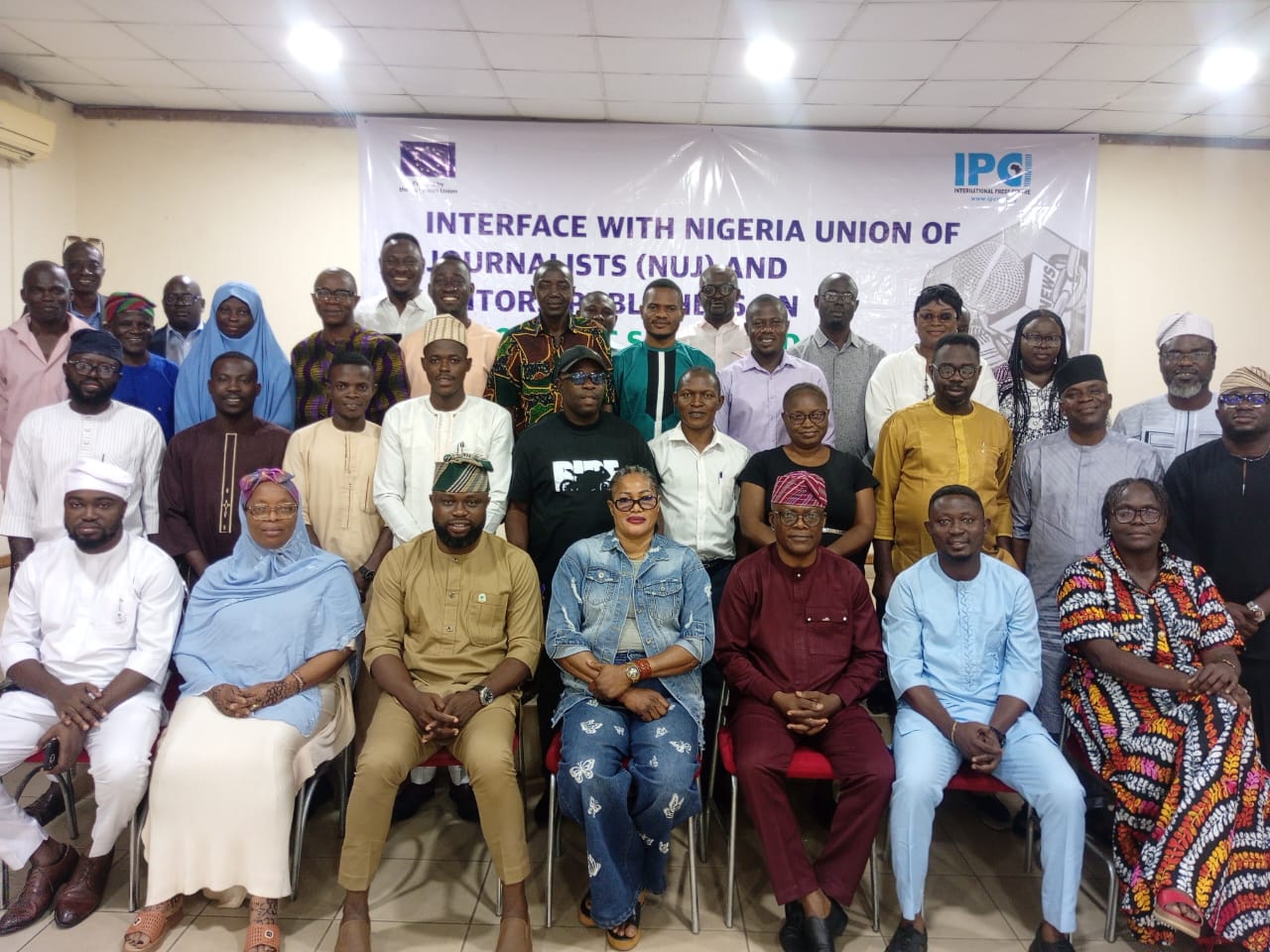
The International Press Centre (IPC) has urged Nigerian journalists to prioritise issue-based, citizen-centred and fact-driven reporting ahead of the 2027 general elections to strengthen democratic accountability and promote credible polls.
The call was made during a one-day engagement with members of online news platforms on electoral reporting, held at Royal Birds Hotels and Towers in Akure, the Ondo State capital, on Friday.
In a lecture entitled “2027 General Election in the Context of Democratic and Accountability Reporting: Scanning the Electoral Environment and Reporting Citizens’ Priority Concerns,” the Director of Corporate Communication at the Federal University of Technology, Akure, Mr Adegbenro Adebanjo, identified neutrality, fairness, balance, objectivity, accuracy and usefulness as major components of responsible election reporting.
He charged journalists to avoid projecting their personal opinions on issues of public interest, urging them instead to gather citizens’ voices and document their lived experiences to hold authorities accountable.
Adegbenro also urged online journalists covering elections to avoid sensationalism, emotional judgement and personal involvement in party affairs while prioritising their safety.
Similarly, a digital media expert, Mr Dare Dabo, examined the role of artificial intelligence in digital journalism during a session entitled “AI and Digital Journalism: Leveraging Technology for Credible Election Coverage.”
Dabo analysed how AI tools could be exploited to distort facts and create fake content, while explaining how journalists could identify AI-generated materials.
During a session on fact-checking, a fact-checker with the Nigeria Democratic Report (NDR), Mr Olusola Oludiran, introduced participants to various tools and platforms for verifying information before publication.
Under his guidance, participants engaged in practical fact-checking exercises to assess their understanding and application of the techniques.
Earlier in his welcome address, the Executive Director of IPC, Mr Lanre Arogundade, stressed the need for journalists to reassess their approaches and strengthen their capacity to provide credible, balanced, inclusive and public-interest information.
Represented by the Programme Officer of IPC, Mrs. Stella Nwofia, Arogundade said the engagement was timely as Nigeria gradually approaches another election cycle, noting that the media had a critical role to play in strengthening democratic institutions and ensuring that citizens made informed decisions about the country’s future.

“Beyond reporting political activities and electoral events, the media has a responsibility to facilitate informed public discourse, scrutinise political promises, hold public officials accountable and ensure that citizens’ voices are heard in the democratic process,” he said.
The IPC director warned that sensationalism, unverified claims, inflammatory rhetoric, and the spread of misinformation and disinformation could undermine public confidence, deepen social divisions and weaken democratic institutions.
He, however, noted that prioritising accuracy, fairness, verification, conflict-sensitive reporting and accountability would strengthen public trust and contribute to peaceful, credible and inclusive elections.
According to him, journalists must move beyond event-driven coverage of political parties and candidates to more substantive reporting that interrogates campaign promises, verifies political claims, monitors the performance of elected officials and highlights issues affecting citizens.
Arogundade challenged journalists to examine whether their reports adequately addressed Nigerians’ concerns about the economy, education, healthcare, security, employment and infrastructure.
He also called for greater visibility for women, young people, persons with disabilities and other underrepresented groups in electoral discourse, stressing the need for inclusive reporting that reflects the interests of different segments of society.
On the growing influence of digital platforms, Arogundade said the changing information environment had created opportunities for public participation but had also increased the speed and scale at which false information, manipulated content, hate speech and divisive narratives could spread.
He urged journalists to strengthen their fact-checking and verification skills, particularly when reporting politically sensitive issues, and to resist the pressure to prioritise speed over accuracy.
“Fact-checking and verification should not be treated as optional additions to journalism. They must be integral to responsible electoral reporting,” he said.
Arogundade also emphasised the need to protect journalists’ safety and professional independence, insisting that media practitioners should be able to carry out their legitimate duties without intimidation, harassment or unlawful interference.
According to him, the success of the engagement should be measured not merely by the quality of discussions or the number of participants but by its impact on journalistic practice in the months leading up to the 2027 general elections.
He said the impact should be reflected in the stories published, claims verified, citizens’ concerns amplified, accountability questions asked and professional standards upheld by media organisations.
Arogundade expressed the IPC’s gratitude to the European Union for providing funding support for the project under which the engagement was organised.
The training also featured practical sessions during which participants presented their commitments to using the knowledge acquired to amplify citizens’ voices and highlight issues affecting society as the 2027 general elections approach.

Leave a Reply