
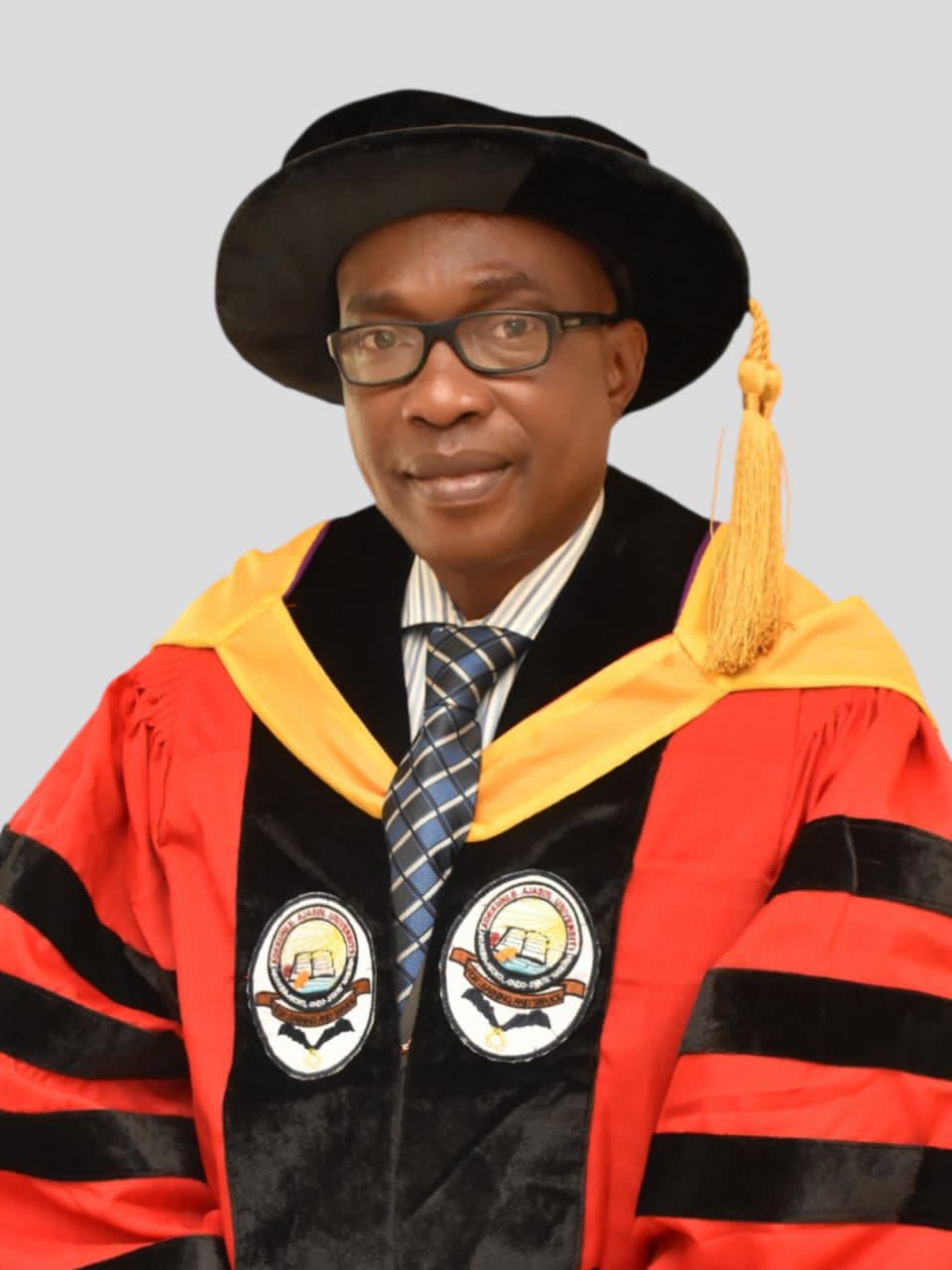
Adekunle Ajasin University, Akungba Akoko (AAUA), is set to host its 59th Inaugural Lecture, a landmark academic event that will be delivered by Professor Adebayo Fatukasi, a highly respected economist and senior academic at the institution. The lecture, scheduled for Tuesday, 21 April 2026, promises to offer fresh perspectives on one of Nigeria’s most persistent challenges: economic revival and poverty reduction.
Titled “Reducing Poverty in Our Land: Divine Mandate of Development Economist!”, the lecture will take place at the University Multipurpose Hall, starting at 2pm prompt, with guests requested to be seated by 1.30pm. The theme reflects Professor Fatukasi’s conviction that development economists have both a professional and moral obligation to drive policies that uplift the poor and restructure national economies for inclusive growth.
According to a statement issued by the Deputy Vice Chancellor and Chairman of Ceremonies, Professor Adebisi Daramola, the Vice Chancellor, Professor Olugbenga Ige, will preside over the event. Senior university officials, deans of faculties, heads of departments, students, and members of the wider community are expected to attend.
Professor Fatukasi’s path to academic distinction began in 1994, when he earned a Master of Science degree in Economics and Finance from the Higher Institute of Economics ‘Karl Marx’ in Sofia, Bulgaria. In 2002, he moved to the Vienna University of Economics and Business Administration in Austria, where he completed his Doctor of Philosophy in Economics. His international training has significantly shaped his approach to development economics, blending rigorous quantitative methods with a deep understanding of transitional economies.
He joined Adekunle Ajasin University in 2003 as a Lecturer II in the Department of Economics. Through consistent research, teaching excellence, and administrative dedication, he rose through the academic ranks to become a professor in 2019, a testament to his scholarly impact and service. Over the years, Professor Fatukasi has served the university in numerous capacities, including Acting Head and substantive Head of the Economics Department, Sub‑Dean of the Faculty of Social and Management Sciences, Acting Dean of the Faculty of the Social Sciences, Coordinator of Departmental Postgraduate Programmes, Head of the Business Committee of the Departmental Academic Board, Chairman of the Faculty of the Social Sciences Students’ Welfare Committee, Director of the Institute of Part‑Time Programmes and the Centre for Distance Learning, and Chairman of the Board of Survey. These roles have equipped him with a holistic understanding of university governance and student welfare.
A prolific scholar, Professor Fatukasi has authored two books and 28 journal articles, and has contributed chapters to four other academic volumes. He has presented papers at numerous conferences both within Nigeria and internationally, including in Ghana and China. His research interests span poverty dynamics, fiscal policy, development finance, and institutional reforms. Beyond his work at AAUA, Professor Fatukasi has served as an Adjunct Senior Lecturer at Achievers University, Owo, and as External Examiner for the National Diploma Programme in the Department of Social Sciences at Rufus Giwa Polytechnic, Owo. He also acted as a Seminar and Conference Assistant at the Hernstein International Management Institute in Vienna, Austria, a role that sharpened his skills in academic event management and international collaboration.
He holds active memberships in several professional bodies, including the Nigerian Economic Society, the Institute of Commerce, and the International Network of African Researchers. In recognition of his expertise, he was also elected a Fellow of the Institute of Policy Management Development.
The inaugural lecture aims to examine how development economics can serve as a practical tool for poverty reduction, wealth creation, and sustainable socio‑economic development in Nigeria. It will highlight actionable policy approaches for improving living standards, particularly at the grassroots level, and explore the ethical and spiritual dimensions of economic planning, as suggested by the lecture’s subtitle, framing poverty reduction as a divine mandate. The lecture also intends to propose institutional reforms that can bridge the gap between macroeconomic growth and household welfare.
Recent posts
Quote of the week
"People ask me what I do in the winter when there's no baseball. I'll tell you what I do. I stare out the window and wait for spring."
~ Rogers Hornsby
About
JATS Online Newspaper is a trusted digital news platform under JATS Communications, delivering original, timely, and solution-focused journalism across Southwest Nigeria
 ..all about information services
Leave a Reply