
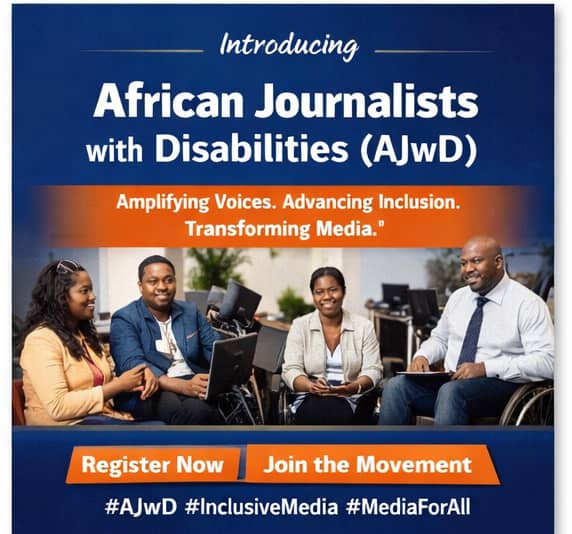
A bold new chapter in African journalism has begun with the official launch of Africa Journalists with Disabilities (AJwD) a continental movement committed to advancing inclusion, equity, and authentic representation in the media landscape.
AJwD emerges as a pan-African professional network designed to empower journalists with disabilities, elevate underrepresented voices, and promote storytelling that reflects the full diversity of African experiences.
At a time when conversations around diversity are gaining traction, the initiative confronts a persistent gap: the continued marginalization of journalists with disabilities within newsrooms across the continent.
From systemic and technological barriers to deep-seated societal attitudes, many journalists with disabilities remain excluded from opportunities to shape narratives. AJwD seeks to change this reality by positioning inclusion not as a token gesture, but as a defining standard of media excellence.
Speaking at the launch, AJwD Africa Lead Yinka Olaito underscored the urgency of the moment: “This is not just about inclusion it is about redefining who gets to tell Africa’s stories. Journalists with disabilities are not merely subjects; they are storytellers, editors, and thought leaders shaping the future of media.”
According to him, AJwD’s mission is anchored in practical action and strategic advocacy.
The network will: Build a vibrant, cross-border community of journalists with disabilities, champion inclusive policies within media organizations, deliver training and capacity-building programs, promote accessible media tools, technologies, and practices, engage key institutions, including the African Union and national governments.
In his goodwill message, the Director of the United Nations Information Centre, Kayanja Ronald, described the launch as both timely and long overdue, noting that it represents a significant milestone in advancing human rights and dignity within the media space.
He emphasised that as journalism continues to evolve, inclusivity must remain central to its growth, ensuring that no one is left behind. According to him, the rapid rise of Artificial Intelligence is reshaping professional practices, creating new opportunities for journalists with disabilities to overcome traditional barriers through the use of assistive technologies and innovative reporting tools.
Kayanja stressed that journalists with disabilities should not only be included in the ongoing transformation of the profession but should also take on leadership roles in shaping its future.
He further reaffirmed the United Nations’ commitment to supporting the programmes of the Association of Journalists with Disabilities (AJwD), urging the organisers to sustain the momentum generated by the launch. He added that the initiative should serve as a springboard for broader collaboration, strategic networking, and sustained advocacy aimed at achieving its long-term goals.
The launch convened journalists, media leaders, and inclusion advocates from across Africa, featuring:
Participation from journalists representing diverse regions of the continent. Keynote speeches and goodwill messages from media stakeholders and Organizations of Persons with Disabilities (OPDs); Thought-provoking panel discussions on the future of inclusive journalism; The official unveiling of AJwD’s programs and strategic partnerships.
A Call to Collaborate
AJwD is calling on a broad coalition of stakeholders to join this transformative movement.
“Together, these actors can help build a media ecosystem that is more inclusive, representative, and reflective of Africa’s true diversity”, says Olaito.
Media Contact
Email: Info@ajwd.org


Leave a Reply