
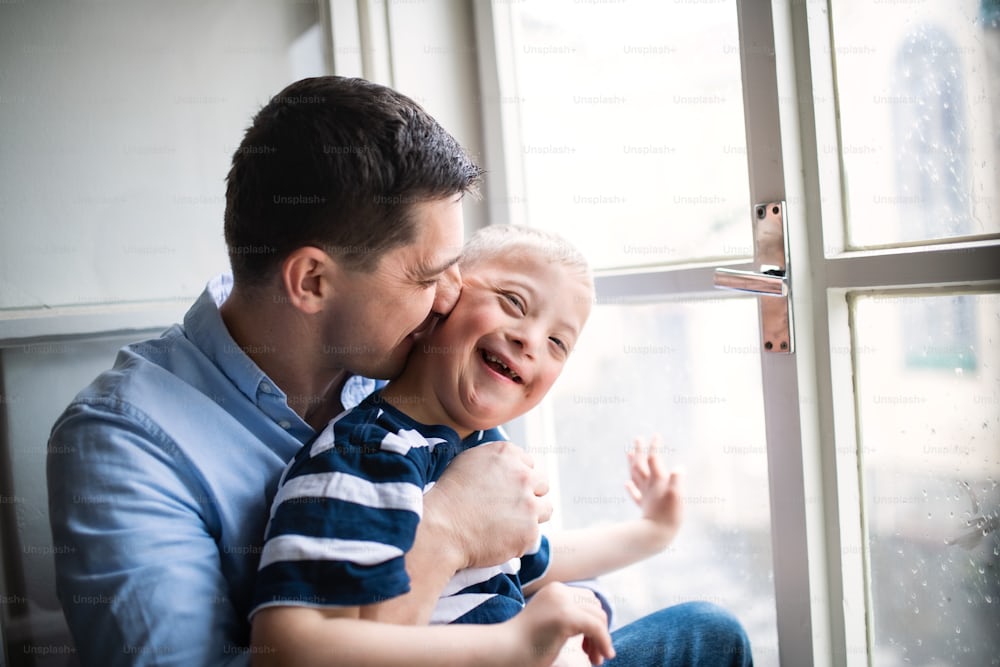
The birth of a child is supposed to be a rewarding journey filled with love, joy, and fulfillment for women, and it is so for some mothers.
However, for mothers who birth children with autism, the reverse is the case, as this motherhood journey often comes with unique and significant challenges.
According to the Centre for Diseases Control and Prevention, Autism spectrum disorder (ASD) is a developmental disability caused by differences in the brain. People with ASD often have problems with social communication and interaction, and restricted or repetitive behaviors or interests. People with ASD may also have different ways of learning, moving, or paying attention.
Autism mothers face a multitude of hurdles that can impact their emotional well-being, relationships, and overall quality of life; from navigating the complexities of diagnosis to managing daily routines and advocating for their child’s needs.
People with autism have trouble understanding what other people think and feel. This makes it hard for them to express themselves, either with words or through gestures, facial expressions, and touch.
The moment a child is diagnosed with this brain disorder, the mother would definitely be overwhelmed and emotionally drained considering the task ahead of her to raise the child.
From recognizing early signs to seeking evaluation, diagnosis and facing shame and stigmatisation, autism mothers often face uncertainty and anxiety about their child’s future. The stigma and misconceptions surrounding autism can add to the stress, leaving mothers feeling isolated and misunderstood.
For Autism mothers who often juggle multiple roles and responsibilities, balancing the needs of their autistic child with those of the family, business and career, can be challenging, leading to feelings of guilt and exhaustion. Even, finding time for self-care and maintaining personal interests can become secondary to the demands of caregiving, further exacerbating stress and burnout.
Sharing her ordeal, Ms. Adesola Alade, mother of 12yrs old austistic girl, popularly known in their neighbourhood as Esther Ayaba, explained bitterly, her efforts to provide proper care for the girl from infancy, regardless of the societal stigma.
As a single parent, she expended her earnings as an artisan to procure constant medications for the child till this age, without help from any corner, including the father. Now, she is bankrupt due to financial constraint to afford payment for her shop and back to a single room with two kids to fend for.
This challenge doesn’t discourage her to yield to family’s pressure to dispose of the girl, as she was termed a burden for her.
Nevertheless, 45years old Ms. Desola is strong-willed to ensure her autistic child is educated like other children, probably because she’s her first child.
Asked if the girl was once enrolled in a school, she said that with her meagre income, she once enrolled her in a special school in Shagamu Ogun State following a tip off that the school provides needed care for its enrollees.
The girl’s behaviour, in terms of social interaction and education, improved; but shuttling Akure and Shagamu was exhausting and this prompted Ms. Desola to withdraw the girl back to Akure, having being informed of the presence of such school at Oke-Igbo.
Unfortunately, the situation of Esther worsen during her short stay at the new environment. As she shared her challenges with The Hope, she backed up her claims and efforts with pictorial evidence. Esther is back home now with bruises on her face which she sustained from the new school, she came back with different behavioural changes that further aggravate her condition.
Undoubtedly, provision of specialised services and therapies for children with autism can be costly and financially draining for families.
To know if there’s a special care or assistance from government for parents of austistic children which people like Ms. Adesola might not be aware of, The Hope spoke with Ondo State Chairman of the Agency with Persons with Disabilities, Mrs. Folasade Arise.
She hinted that, though there’s no provision for autistic children in the law that established the agency, the agency still provides assistance to those who seek such in respect of their autistic child.
According to her, Lagos State has standard policy and care services for them, which is largely supported by Non-governmental organisations and international donors.
Unlike in Nigeria, where victims of this disorder are seen wandering around the street, constituting nuisance due to neglect by their families, some developed countries have policies that cater to these categories of people.
The Americans with Disabilities Act (ADA) is the most fundamental law protecting the civil rights of people with all types of disabilities, including those with Autism. The ADA provides civil rights protections to people with Autism similar to those provided to individuals on the basis of race, colour, sex, national origin, age, and religion. It guarantees equal opportunity for individuals with Autism in public accommodations, employment, transportation, state and local government services, and telecommunications.
While some Nigerian autism parents couldn’t allow their child to roam the street, some have resorted to extermination of the child, as there have been reported cases of parents killing their autistic child due to lack of a strong support network in Nigerian society.
Ms. Desola’s case is one of the few autistic mothers who’s resilient and unabated not to hide or kill her child despite the stress involved, others either abandon them somewhere or kill secretly.
As she waved off the mythical belief of her family that the girl was possessed, she has resolved to be praying for the child with a strong belief that she would be normal one day, saying despite her condition she’s still useful for house shores.
In his contribution, a caregiver who has been catering to over 7,000 children with different types of disabilities, including autism, through his NGO, Mr. Michael Sowunmi hinted that, autistic children in Nigeria suffer neglect due to the misconceptions about their personality.
He said:” Nigerians misunderstood autism, leading to fear, isolation, and shame for families which led to lack of awareness and stigma. Special needs education is scarce, and some schools reject autistic children altogether. ”

According to the Raising Stars Africa CEO, specialized care for this category of people is expensive, placing a burden on families, hence, the reason most parents of autistic children abandon them.
As one of the non-governmental organisations in Lagos state that is committed to the cause of catering for this type of children, he revealed that Raising Star Africa has solely renovated three inclusive schools to make education and care accessible to children with disabilities and train teachers on life skills to be able to cater to autistic children; rather than waiting for government.
He affirmed that NGOs like his in Lagos state took it upon themselves to continually create awareness and advocacy events to amplify inclusion and reduce stigmatization and marginalization of autistic children in the social and educational communities.
He advised governments at all levels to increase awareness campaigns about autism,
invest in Specialist Training by training more doctors, therapists, and educators to improve diagnosis and support.
Sowunmi emphasised the need for governments to establish and fund schools with trained staff to cater to autistic children’s needs..
“For the parents, they should seek support group, seek early diagnosis, learn about their child’s needs and fight for appropriate educational opportunities and support. With this we can help an autistic child thrive successfull, ” he added.
In a research, “A Psychologist’s Perspective on the Taboo of Autism in Nigeri,” it was discovered that the level of awareness about autism in Nigeria is pathetically low. The research observed some awareness amongst those in the medical community, but concluded that the extent of their knowledge is often limited. Most only know the symptoms and manifestations of “infantile autism”. The majority do not know that there are different forms of autism spectrum disorders (such as regressive autism); some don’t believe the condition is treatable; and nearly 70 percent have no clue as to where to refer cases and/or what to do even when sure about a diagnosis.
This was evident in the efforts of The Hope to get a medical expert who can authoritatively speak autism. A general medicine doctor referred her to a paediatrician, paediatrician said it’s probably within the purview of a behavioral specialist.
By raising awareness about the challenges faced by autism mothers and advocating greater access to resources and support services, we can work towards creating a more inclusive and supportive environment for families affected by autism, just like their counterparts in the developed countries.
Mary Agidi, Publisher of JATS Online News, writes.
For any assistance for Ms. Adesola to assist in catering for her autistic child, kindly contact us on 07039060017 or email jatscommunications@gmail.com
 ..all about information services
Leave a Reply