
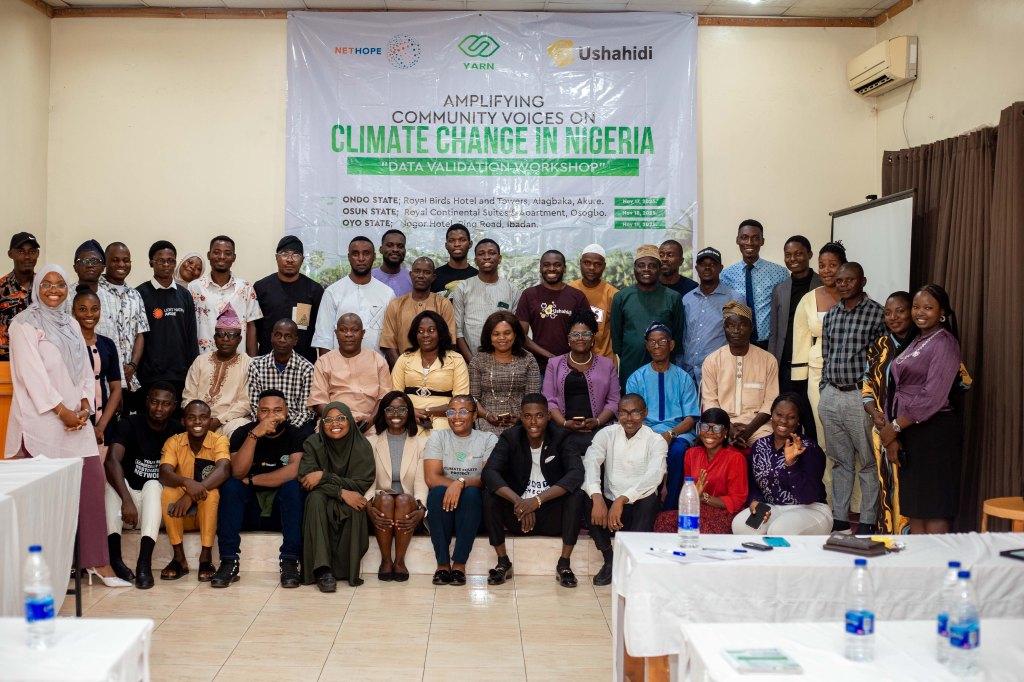
..as NETHOPE, Ushahidi, YARN present findings to stakeholders
By Mary Agidi
As the effects of climate change continue to unfold and become an undeniable reality, the need to adopt urgent and effective adaptation measures has become more critical.
In Ondo State, a recent survey sponsored by the Youth in Agroecology and Restoration Network (YARN) with the support of NETHOPE and Ushahidi has identified flooding, heatwaves, and drought as the major climate-related challenges confronting residents.
The findings, presented during a validation meeting for a climate equity project held at Royal Bird Hotel and Towers, Akure, by a representative of Ushahidi, Joseph Kirai, highlighted key adaptation measures needed across communities.
These include improved infrastructure and drainage systems, climate education and awareness, financial support and economic empowerment, and enhanced water supply and access.
The report also pointed to factors driving climate change in the state, such as natural environmental disruptions, industrial processes, fossil fuel use, and inadequate public knowledge.
According to Kirai, the data collection process included monitoring public sentiments on social media platforms such as Nairaland, X, and Facebook, as well as on-ground fieldwork conducted by data champions who engaged residents to identify the climate impacts they experience in their communities.
In his opening remarks, the Executive Director of YARN and Nigeria’s project implementation partner, Opeyemi Elujulo—represented by Seyi Olawuyi—explained that the validation meeting formed part of the ongoing frontline initiative titled “Amplifying Community Voices of Climate Change in Nigeria.” The project, which began in July across Ondo, Osun, and Oyo States, targeted 5,000 community voices.
He noted that the validation exercise aimed to share findings from Ilaje, Akoko, and Akure communities and to chart a clearer path toward achieving the project’s objectives.
He emphasised that the meeting was not the end of the project but a step toward integrating community experiences into climate response strategies.
Speaking on behalf of NETHOPE, Aminat Adebayo disclosed that the number of captured voices exceeded expectations, with over 9,000 responses recorded across the three states. She added that relevant government Ministries were invited to the meeting to hear directly from affected residents and use the data to develop informed adaptation plans.
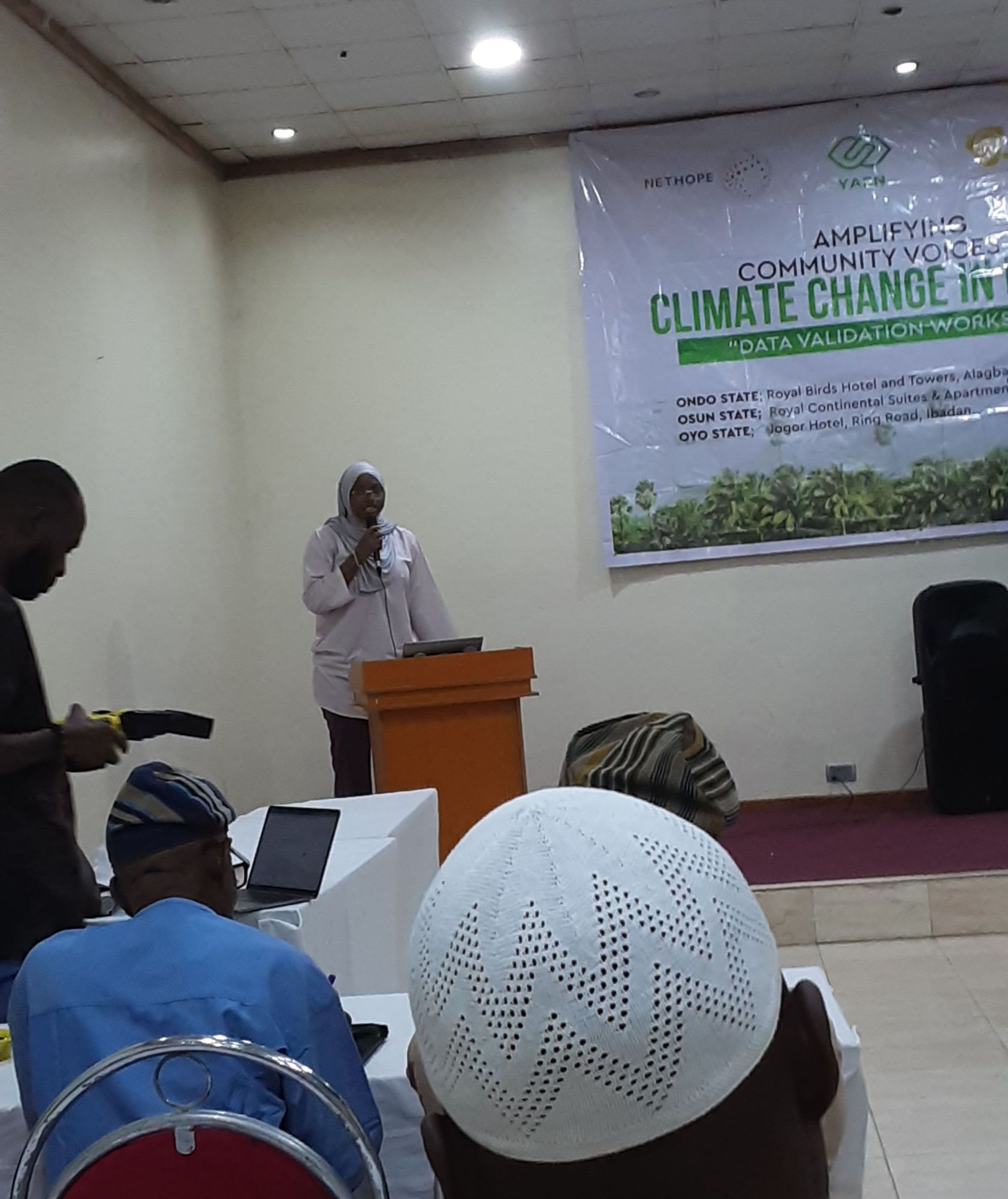
According to her, the project is crucial, especially as some Nigerians still perceive climate change as a foreign issue affecting only developed nations, even among the elites.
Providing insights into the Ondo State Government’s mitigation and adaptation efforts, the Programme Manager at the Agricultural Development Programme (ADP), Ministry of Agriculture, Mrs. Justina Arogundade, stated that the government has existing strategies, including training farmers on climate-smart agriculture.
She added that the state has begun reviving its 16 forest reserves, which have suffered encroachment, with one million tree seedlings already raised in Ore for distribution next year.
She confirmed that feedback from the validation meeting would be incorporated into the Ministry’s climate adaptation agenda.
Also speaking, a Director of Climate Change at the Ministry of Environment disclosed that excavators have been stationed across all 18 local government areas to support rapid response to flood events through channelisation.
NETHOPE, a U.S.-based organisation, leverages digital technology to support vulnerable communities, including through climate intervention and capacity-building initiatives. Ushahidi, a Kenya-based organisation, also prioritises climate change among its thematic areas, which informed its partnership with YARN on the project.
Speaking with journalists, the Implementation Manager of Ushahidi, Rhoda Omenya, stressed the importance of collaborative action in addressing climate impacts.
She noted that the missions of the two international partners align with YARN’s commitment to community-driven climate solutions.
“Both community members and the government have roles to play in climate action. If Nigerians wait for government alone, progress will be slow. Everyone must contribute, and CSOs must collaborate with citizens and government so we can collectively tackle climate change,” she said.
The meeting was attended by representatives of Civil Society Organisations, community leaders, data enumerators, and government officials.
 ..all about information services
Leave a Reply