
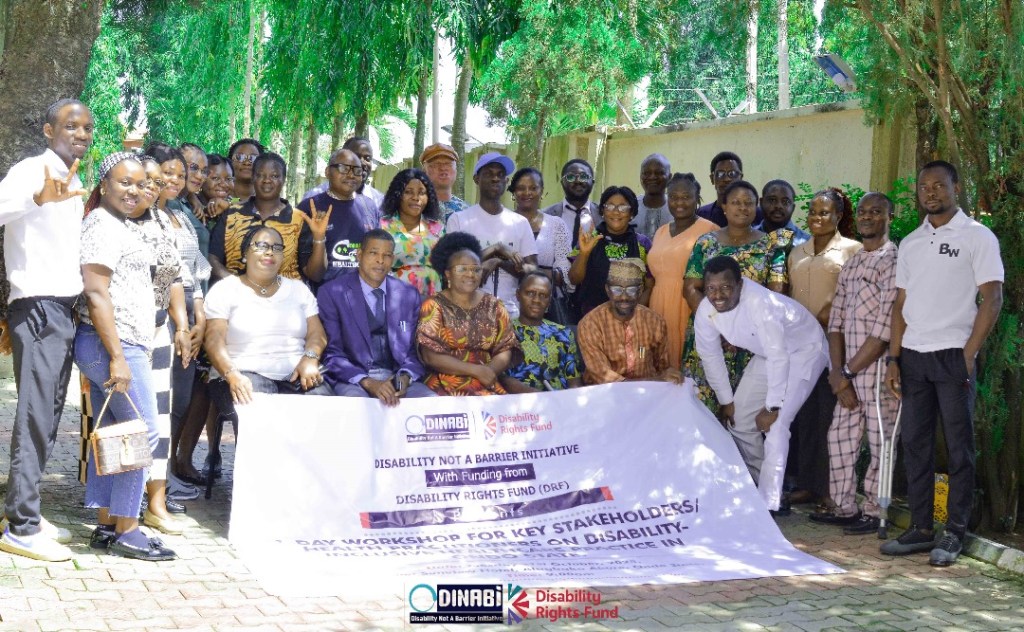
As part of its continuous advocacy campaign to amplify the rights of Persons with Disabilities (PWDs) to accessible healthcare services, the Disability Not A Barrier Initiative (DINABI) has exposed health practitioners in Ondo to globally acceptable practices for relating with patients with disabilities.
At a one-day workshop for key stakeholders and health practitioners on disability-inclusive healthcare practice, held at Sunview Hotel, Alagbaka, on tuesday, 21st October 2025, DINABI presented the outcome of its survey among PWDs in Ondo State, which revealed that 91.8% of healthcare services in the state are not accessible to PWDs.
This report, coupled with the fact that Ondo is the only state in the Southwest without a domesticated disability law, made the workshop imperative to ensure that barriers to inclusive healthcare are eliminated.
According to the Executive Director of DINABI, Engr. Funso Olajide, the existing disability law in Ondo State only established the agency for the welfare of PWDs. Hence, DINABI extended its advocacy to the state to push for the domestication of a comprehensive disability law, which is already at the passage stage before the executive arm of government.
Speaking on “Healthcare and Persons with Disabilities,” Engr. Olajide exposed participants to legal frameworks related to inclusive healthcare practices, including Articles 12 and 25 of the International Covenant on Economic, Social, and Cultural Rights, which recognise the right of all persons to the highest attainable standard of health and the principles of universal health coverage.
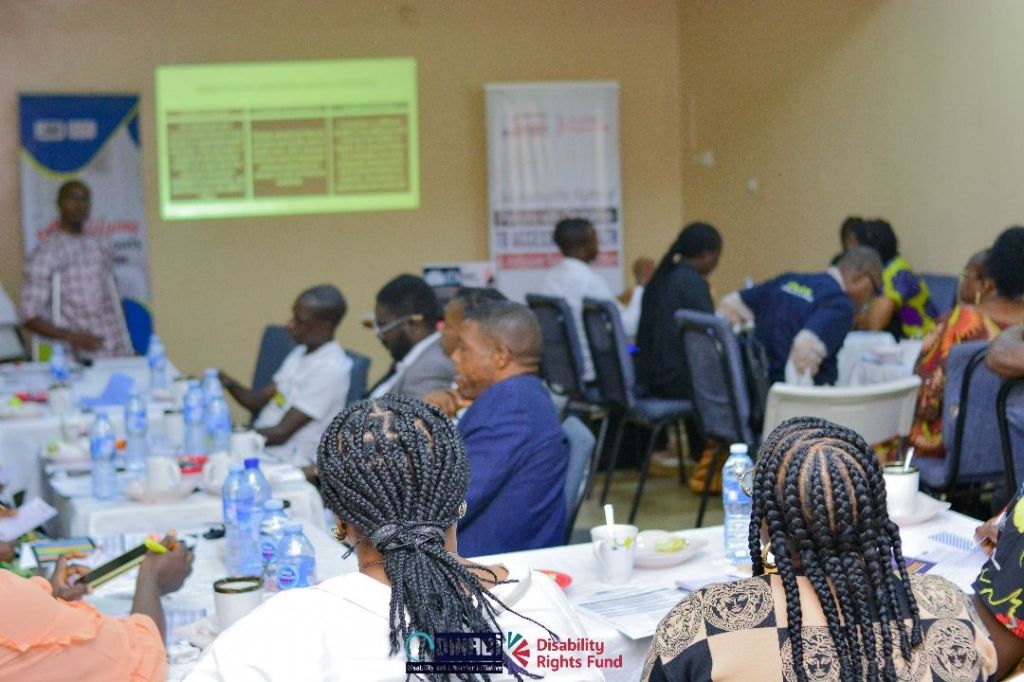
He highlighted barriers to accessible healthcare services to include: Physical and environmental barriers such as lack of ramps, examination tables, restrooms, clear signage, diagnostic machines, and treatment chairs; Attitudinal and communication barriers such as stigma, discrimination, limited knowledge on disability inclusion, lack of sign language interpreters, and absence of materials in Braille or large print.
Others are: Financial and logistical barriers including the high cost of assistive devices; and Systemic barriers such as lack of inclusive policies, shortage of specialised personnel, insufficient budget allocation, inadequate disability-disaggregated data, and poor coordination with stakeholders.
The DINABI boss also engaged participants on strategies for mainstreaming disability rights into healthcare, which sparked interactive discussions. The healthcare practitioners demonstrated a clear acquisition of new knowledge and understanding.
Taking participants through the topic “Understanding the Concept of Disability Inclusion,” the Head of Office at DINABI, Mr. Michael Ogunduyile, emphasised the need to relate with PWDs based on the human rights model—treating them as human beings first rather than as objects of charity.
He highlighted disability inclusion principles to include respect for inherent dignity, non-discrimination, full participation in society, accessibility, equality of opportunity, respect for human diversity, gender equality and equity, and respect for the rights of children with disabilities.
Participants, including medical doctors, directors and officers from the Ministry of Health, Hospital Management Board, nurses, community health workers, and members of CSOs, commended the convener for exposing them to new knowledge on how to relate with PWDs.
They expressed readiness to include PWDs in their programmes, while the Society for Family Health announced its plan to create a PWDs unit starting next year.
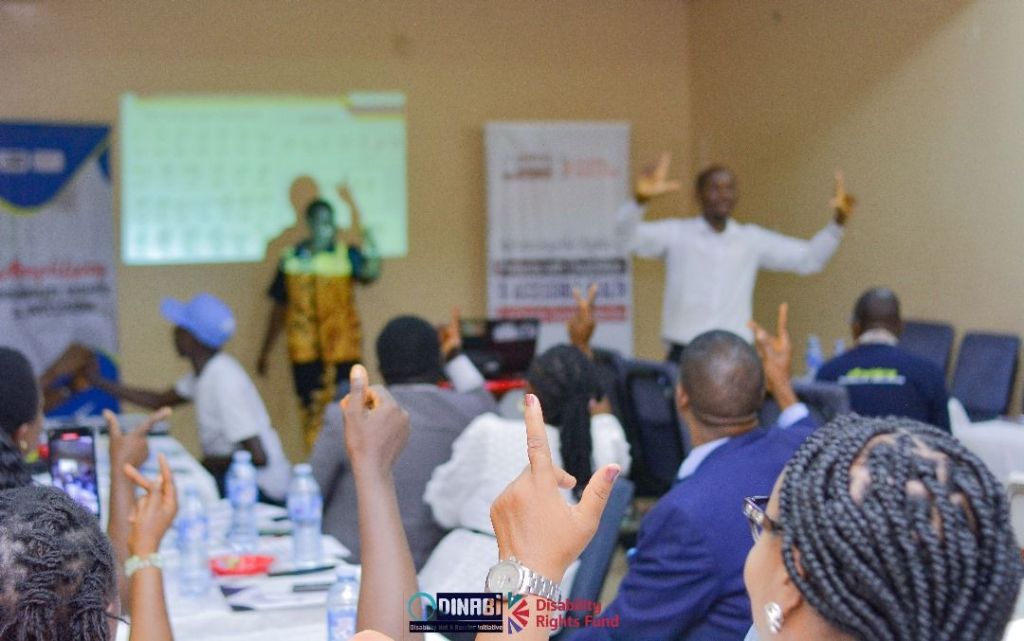
Participants were also taught basic sign language to enhance their communication with hearing-impaired patients.
 ..all about information services
Leave a Reply