

By Mary Agidi
In the heart of Isinkan market, Akure—the capital of Ondo State—thrives a little-known but essential segment that specialises in the sale of assorted leaves for the beloved black soup, a staple in many homes. Every day, this modest enclave draws people from all walks of life—civil servants, traders, housewives, and even political figures—seeking these medicinal leaves that contribute to both culinary delight and health preservation.
Yet, behind the thriving patronage lies a community of hardworking women whose resilience, passion, and economic contribution often go unnoticed. These women are not just traders; they are custodians of indigenous knowledge, natural healthcare, and uncelebrated entrepreneurship.
Positioned side by side with leaf vendors are grinders—equally diligent women—who complete the value chain by helping buyers process the leaves into ready-to-cook soup blends. It is a seamless collaboration built over decades, but one that is rarely acknowledged in mainstream discourse on women empowerment or economic development.
A deep dive into their stories reveals both the challenges and the unwavering determination that define their daily hustle.
A Lifetime of Herbal Knowledge and Survival
Madam Dorcas Olufunmi, a septuagenarian, has been in this trade for over 50 years. Speaking with The Hope, she recounted how, with support from LAPO (a microfinance institution), she grew her modest business to the point of building a house. For Madam Olufunmi, the trade is more than a livelihood—it is a way of life. “This is what I grew up doing,” she said. “I feed myself from it every day.”
Despite her age, her memory of herbs remains sharp. She proudly revealed that she hasn’t taken orthodox medicine in five decades, attributing her health to the herbs she sells. With care and precision, she explained the unique medicinal functions of various leaves in her store, which is a proof of her expertise and commitment to the craft.
Overlooked and Underserved
Despite their relevance, these women lamented that they have never benefitted from business empowerment schemes or access to government or NGO-backed small-scale loans. A grinder, Mrs. Olabisi Fatuashe, lamented how they are often excluded from initiatives such as grinding machine empowerment programmes, even though their work supports the entire soup preparation process for thousands of households.
Women Leading, From Forest to Market
Mrs. Kolawole Funmilola, another elderly leaf vendor, shared how she inherited the skill from her grandmother. “I didn’t know it would become my means of livelihood,” she said, underscoring how generations of women have sustained and transferred this indigenous knowledge. She added a critical insight: if leaves are sourced from fumigated areas, they can pose health risks—highlighting the need for awareness and education on safe herbal practices.
Close to Madam Dorcas Olufunmi is a lady in his late 20s who identified herself as Silifat who is overseeing her ailing mother leaves business for sustainability.
The Evidence is Clear
A recent online survey conducted within Akure highlighted the high level of patronage for this unique market segment. Of the respondents, 80% had been loyal customers for five to twenty years. While 60% affirmed the medicinal value of the soup, 40% considered it both medicinal and economical.
Demographically, 80% of the respondents were professionals and 20% religious leaders, mostly within the age ranges of 36 to 50 (40%) and 51 and above (60%). Gender-wise, 80% were female, reflecting the soup’s strong appeal among women.
When asked if these women contribute meaningfully to healthy living and economic productivity, 100% of the respondents said yes. Yet, these market women remain on the fringes of support systems designed to empower small businesses.
Resilience in the Face of Stigma
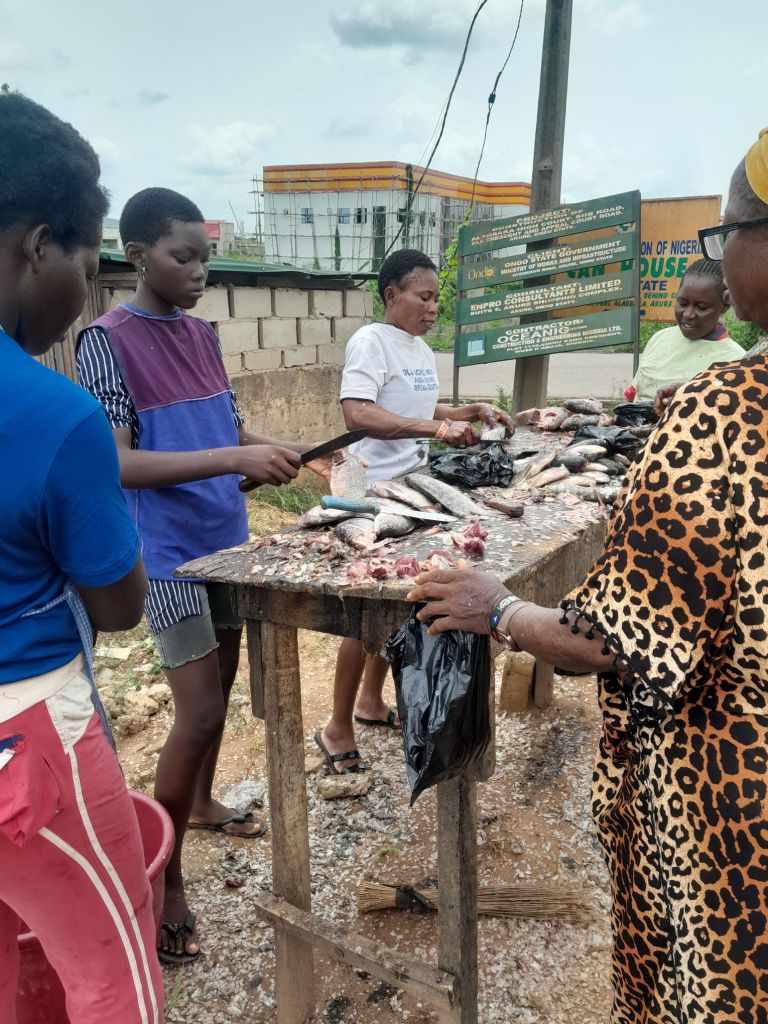
At the Court of Appeal Junction, another example of female tenacity stands out. Ms. Blessing, a single mother in her 30s, collaborates with Hausa vendors to descale and portion tilapia fish for customers.
She charges between ₦500 and ₦1,000 depending on quantity and even offers fish-drying services upon request. Despite the perceived indignity or dirtiness of the job, Blessing remains proud of her hustle, proving that dignity lies in honest labor, not in societal approval.
Recognizing the Invisible Workforce
These women—leaf vendors, grinders, and fish processors—are silent engines of community health and economic stability. They may lack formal education, access to capital, or public recognition, but their resilience fuels households, preserves cultural heritage, and boosts local economies.
Their stories call for more inclusive empowerment programmes that recognize and uplift women in informal sectors. Empowering them is not just a social obligation—it’s a strategic step toward sustainable development and gender equity.
First published in The Hope Newspapers edition of 27th July 2025
 ..all about information services
Leave a Reply