
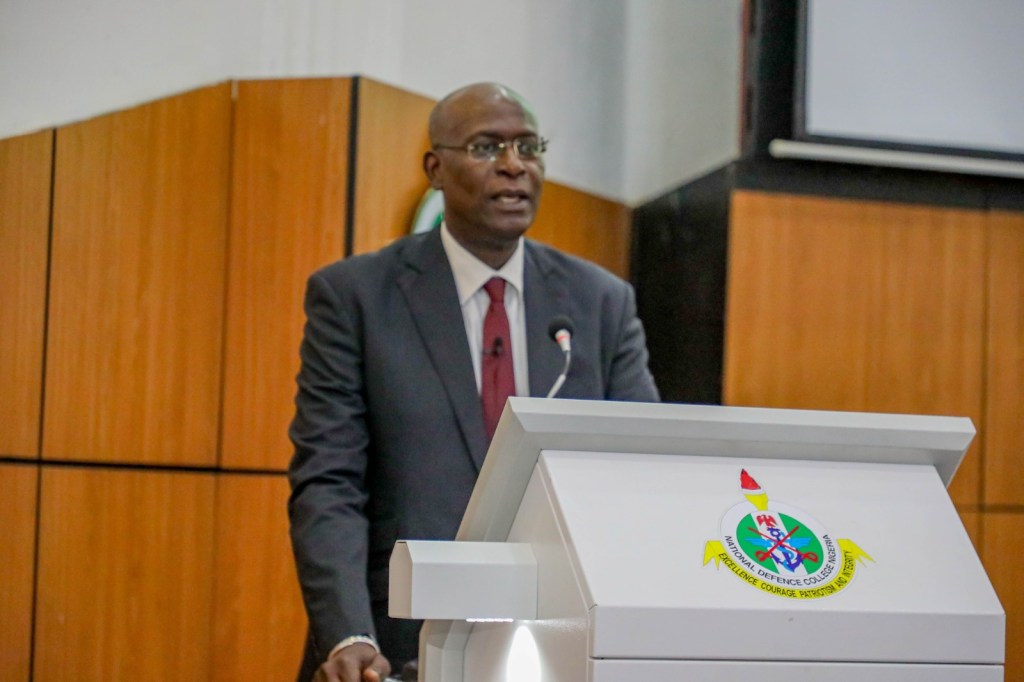
The United Nations Resident Coordinator in Nigeria, Mr. Mohamed Fall, has commended Nigeria for the country’s support to United Nations Peace Operations since 1960.
Nigeria has deployed more than 200,000 troops, police, and civilians have served in 41 peace operations over the years.
Mr. Fall was delivering a lecture at the National Defence College in Abuja on the topic ‘Emerging Issues in Contemporary Peace Support Operations (PSO) Environment.’
He observed that the global security landscape is rapidly evolving, and peacekeeping operations have been and must continue to adapt accordingly.
The complex challenges confronting peacekeepers are increasingly driven by factors that do not stop at national borders.
These include organized crime, violent extremism, terrorism, rapid weaponization of new technologies, proliferation of small arms and light weapons including across borders, pervasive misinformation, and climate change.
In many regions, peacekeepers face direct threats from armed militias, criminal organizations, and violent extremist groups, making their work increasingly hazardous.
He further noted that future peace support operations will not only need to maintain peace but also proactively prevent conflicts, address governance gaps, and strengthen the resilience of affected states.
As peacekeeping evolves, it must become a more dynamic, flexible, and efficient tool for global stability.
Mr. Fall informed the Senior Military Officers that UN Member States agreed on actions to ensure that peace operations adapt to the challenges of the 21st century and are able to respond to the changing realities.
 ..all about information services
Leave a Reply