
Now that the federal government has granted financial autonomy to the 774 local government areas, the need to ensure proper and seamless procurement processes by local government officials becomes crucial in achieving the desired development in rural areas.
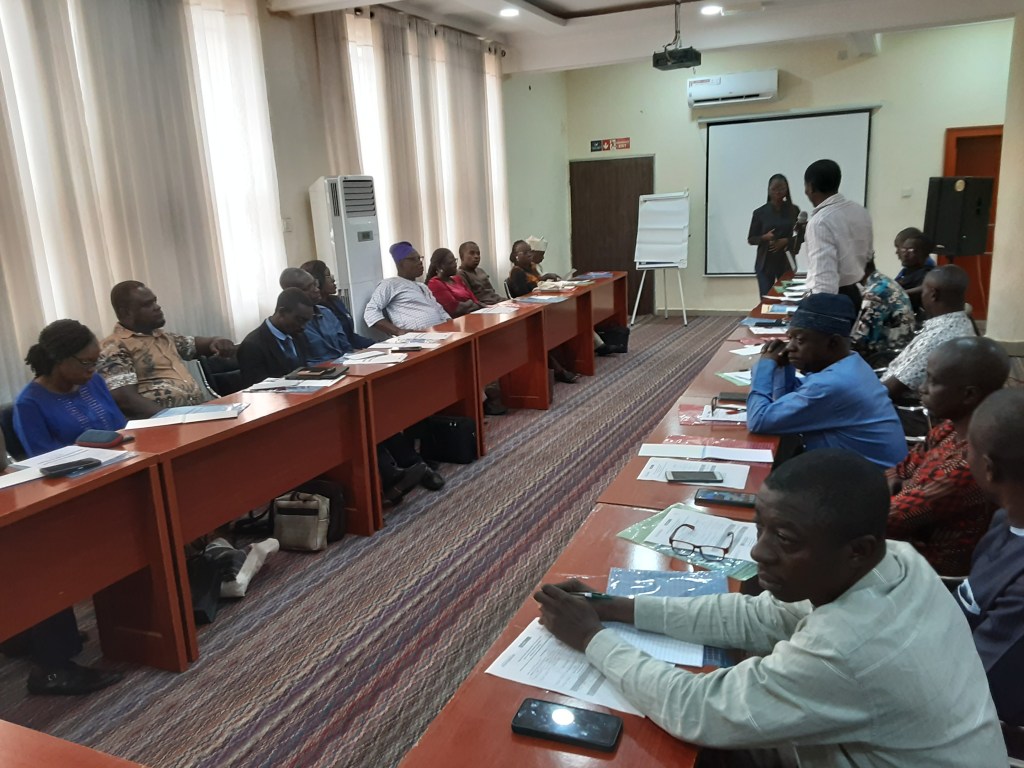
To this end, the Nigeria Civil Society Situation Room, in collaboration with the Life and Peace Development Organization, on Thursday, August 15th, commenced a 2-day meeting to review the status of the implementation of the developed Procurement Plan, with accounting officers selected from five local government areas in Ondo State.
The programme, held at the Continent Hotel & Suites in Akure, the state capital, is supported by the UK Foreign, Commonwealth and Development Office (FCDO).
Mr. Franklin Oloniju, the Executive Director of the Life and Peace Development Organization in charge of the project implementation, opined that historically, local government authorities had never handled procurement due to the centralization of this process under the Ministry of Local Government and Chieftaincy Affairs.
He noted that, with the recent approval of local government autonomy, the landscape has shifted, hence the need to equip local government accounting officials with the necessary knowledge for the task ahead.
According to him, Ondo State passed a public procurement law in 2017, extending the mandate to local governments to establish their procurement structures at the grassroots level as per state regulations, but this law could not be put into action as the necessary structures were not established at the local government level.

“What we are doing as an organization is working with the Local Government Service Commission to see how those structures can be revitalized and ensure that local governments are in control of their procurement processes. Now with the autonomy, it is mandatory for local governments to establish these structures unless they relax some of the laws. The accounting officer of each local government will bear responsibility for any procurement-related violations within that jurisdiction, as each local government is now considered a procuring entity. That is, they have the right to manage their procurement. However, if the current structures and systems are deemed inadequate, then it will not be fulfilled.”
“Therefore, the training sessions and numerous meetings conducted with local government officials aim to guide them through the creation of tender boards and assist in developing a procurement plan. The procurement plan is derived from the budgets. It means that every time a local government prepares its budget, the unit within the local government will now be able to work with other departments to come up with a plan that shows and understands the procurement needs of those departments.”
“So, the meeting is to train them on bid opening and calls for procurement services,” he said.
Oloniju lauded the Ondo State Local Government Service Commission for embracing the intervention, stating that the commission had expressed its readiness to set up procurement units in all the local government areas.
“Our belief is that if the local government is well-structured to manage its resources, the pressure on the state will be reduced, and development will cascade at the local government level, reducing poverty. Managing waste, ineptitude, and capacity weaknesses at the local government areas will provide the needed development to the entire state,” he added.
The selected piloting local government areas for the process are Ile-Oluji/Oke-Igbo, Akure North and South, Ondo West, and Owo Local Government.

In his opening remarks, the Permanent Secretary of the Ondo State Local Government Service Commission, Dr. Bayo Ilawole, stated that the procurement law is aimed at streamlining the processes of acquiring facilities and guiding people into the effective and efficient use of the resources of government. Corruption is endemic in the government system, and the law is designed to put a system in place to expose corrupt practices, hence the need to utilize the procurement act, says Ilawole.
Speaking on the implication of the procurement act on local government autonomy, he said: “The Procurement Act will play a major role in the sense that people who are coming on board will not see it as business as usual. They will know that there are rules and guidelines that will guide their operations and functionalities and that if you run afoul of the law, there are penalties you will face. The procurement act, if fully entrenched in our local government system, will guide against excesses of the operators of the system,” he said.

Day one activities included an overview of the procurement plan, which was anchored by the Director of Enforcement and Certification at the State Bureau of Public Procurement, Mr. Bunmi Akinsemola, and a review of the implementation status.
 ..all about information services
Leave a Reply